In Lewiston schools, trusted relationships help students navigate challenges, find opportunities, and build confidence in their futures
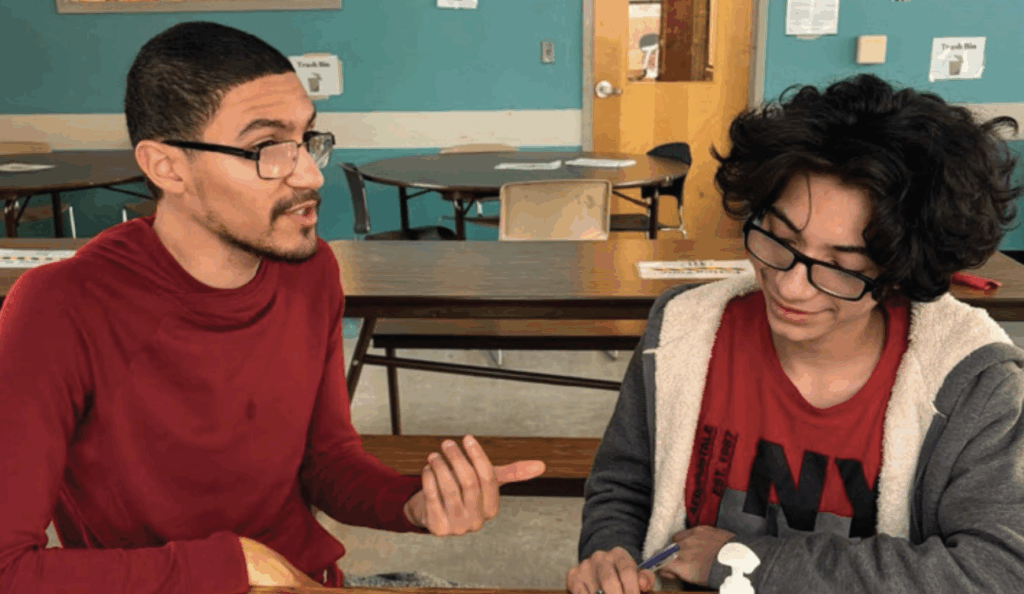
Through Tree Street Youth Center’s afterschool BRANCHES program in Lewiston, young people can find academic help, mentoring, and a nonjudgmental ear to help them work through challenges. Co-founder and Executive Director Julia Sleeper-Whiting describes the approach as “a help desk for all youth” – a place to bring questions they may not know whom else to ask.
With John T. Gorman Foundation support, a partnership between Tree Street and Lewiston Public Schools has brought that “help desk” into local schools. In dedicated BRANCHES spaces at Lewiston Middle and High Schools – and, new this fall, the alternative high school Next STEP – Tree Street staff work alongside school staff to help students navigate school and plan what comes next.
For Superintendent Jake Langlais, the partnership has brought an important community strength into school buildings – adults whom many students already know and trust. Through those relationships, staff are helping young people build the skills and confidence to engage more fully in their education.
Building Trust, Maintaining Expectations
At Lewiston High School, BRANCHES staff member Deeqa Nur begins building relationships through casual interactions – asking students about themselves at lunch, talking in the hallways, or sharing a joke as they head to Tree Street after school.
Those encounters help students become comfortable approaching her when something more serious comes up. They also establish a balance – staff can laugh and joke with students while holding firm expectations around schoolwork and responsibilities.
The spaces are open to all students, though access is structured differently at each school. Teachers may suggest a visit, and some students have regular support built into their days. But students are most often making the choice to visit BRANCHES on their own.
Fernando Hinojosa, who works in the middle school BRANCHES space, says preserving that choice helps maintain a place students want to seek out. Staff work with teachers to ensure referrals are focused on constructive opportunities to help with academic assistance, social-emotional support, mentoring, and enrichment.
Once students arrive, staff take time to understand their needs. Covy Dufort, who works in the new Next STEP BRANCHES room, offers an example – a student may bring a math assignment but be too upset or distracted to begin. Talking through what is on their mind can help them settle and become ready to work.
That flexibility reflects the staff’s distinct role. While teachers have classes to lead and curriculum to cover, BRANCHES staff have more room to investigate the issues that are contributing to a student’s behavior, help them refocus, and make a smooth transition back into the school day.
Making Connections in Real Time
Being inside the school allows staff to act on those relationships when students need them.
Afterschool staff might only hear about a classroom disagreement hours later, Nur said. But a student can approach her during the day, and she can accompany them back to class to clarify an assignment or facilitate a conversation with a teacher. Over time, she has seen students become better able to discuss problems with teachers and work through disagreements on their own.
Langlais believes that real-time support has been a positive influence on attendance, behavior, and academics. Helping students stay engaged, resolve conflicts, and return to class has created more opportunity for education.
“If they’re at school, they have access to learning,” he said. “If they’re not having their access to learning disrupted, they’re getting more curriculum. All those things build.”
Helping Students See What Comes Next
Alongside addressing immediate challenges, BRANCHES staff help students identify what they want to work toward and how education aligns with those goals.
At the high school and Next STEP, staff are helping seniors with financial aid applications and college choices as well as exploring trades and other pathways that reflect their interests. Staff then connect those aspirations to practical steps – including completing the work needed to graduate.
As the pilot enters its third year, BRANCHES staff increasingly feel like the program is an established part of the school. Administrators regularly recommend students to the program, teachers are working with them more closely to address situations, and there is growing interest in supporting students more holistically, they said.
Langlais agreed, emphasizing that BRANCHES is part of a larger collective effort with Tree Street and other community partners to support student well-being and learning. Foundation support has also contributed to OWL, a preventive program to support students at risk of disengagement, and ROOTED, a restorative program for students who are working to return to school after expulsion.
“It’s all part of a large woven basket of support we’re trying to build,” he said.