A highly successful approach to addressing students’ needs and nurturing their strengths is launching in two Oxford County schools.
 Students do not leave their outside lives at the door when they walk into school. When schools help address students’ needs and build on strengths, students are better able to learn and thrive.
This is the core principle behind City Connects, a model developed at Boston College to help schools support the development and well-being of students. The approach centers on individualized plans that address every student’s comprehensive needs and support their aspirations. Implemented in sites across the country over the last 25 years, the model has shown consistent, positive results in urban and rural communities with deep socioeconomic challenges.
With support from the John T. Gorman Foundation, the approach is has now come to Oxford County, Maine – where two elementary schools will see what is possible with a systematic, holistic approach to supporting the success of every student.
Supporting the Whole Student
City Connects first launched in Boston in 2000 as a collaboration between Boston College researchers, Boston Public Schools, and community partners to address the out-of-school factors that were impacting student well-being and academic performance. Development of the evidence-based model combined two years of input from school administrators, students, and families with emerging insights from developmental science.
The science closely aligned with the community’s insights, said City Connects Executive Director Mary Walsh. It wasn’t enough for schools to focus on academics alone – they needed to take a more expansive view of what students needed. In response, City Connects was built as an integrated system to support the “whole student” across four domains of child development: academic, social-emotional-behavioral, physical health, and family.
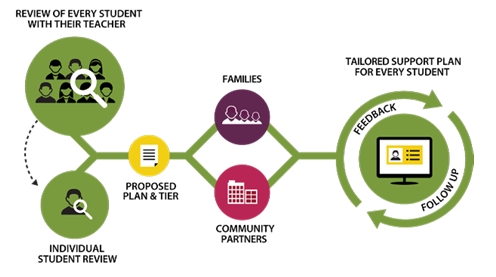
“It’s really a simple idea,” Walsh said. “If we give every child a plan for the services and enrichment opportunities they should have, then they will thrive.”
City Connects coordinators in schools work with administrators, teachers, and families to identify each student’s needs, strengths, and interests and build individualized plans to support progress across all four areas of development. At the same time, coordinators develop community partnerships, expand school resources, and build relationships with families to put each plan into action.
City Connects is currently being implemented in early childhood, elementary, middle and high schools across eight states and Dublin, Ireland. In peer-reviewed research, it has repeatedly shown highly positive outcomes. Students in schools implementing City Connects demonstrate improved behavior and academic effort, attend school more regularly, and outperform their peers on statewide assessments.
City Connects attributes the model’s success to several key components.
- Supporting Every Child – While assessments identify intensive supports for some children, every student benefits from a plan. A conversation with every teacher about every child in the class ensures that high-performing children with unseen challenges receive support, those at risk of future issues receive early intervention, and others can accelerate their progress.
- Fostering Strengths and Interests – In addition to addressing barriers to learning, City Connects cultivates opportunities for students to build on their strengths and explore their interests. Doing so helps children build positive mental well-being, resilience, and greater aspirations.
- Engaging the Community – Schools have a critical role to play in supporting student well-being, health, and happiness, but can’t do it on their own. A key part of City Connects is developing a network of community partners who can help address needs and connect students to opportunities.
- Building Relationships with Families – City Connects works closely with families, especially those whose children require the most intensive support, to understand the many dimensions of a child’s life and connect them to services.
Bringing City Connects to Maine
The Foundation has provided a grant to implement City Connects over the next three years in two MSAD 17 schools – Guy E. Rowe Elementary School in Norway and Oxford Elementary in Oxford. The schools were selected for their level of need, rural setting, and student-centered focus.
“City Connects is built on a sound approach to helping schools address comprehensive student needs alongside their families and communities,” said Jennifer Beck, Chief Program Officer at the John T. Gorman Foundation. “We’re looking forward to seeing the difference it can make for students in Oxford County, as well as potential lessons for delivering this kind of systematic support in rural communities across Maine.”
Oxford Principal Caitlin Dailey and Rowe Principal Catherine Bickford are excited by the opportunity to build on their schools’ student-centered work and align community support where it can have the greatest impact.
The principals are candid about the challenges students come to school with. Substance use and domestic violence at home, food and housing instability, and lack of transportation are affecting their ability to learn and thrive. The schools are doing their best to address those needs, but welcome new resources to strengthen and coordinate that response.
“We’ve tried to think about the barriers to learning before and we often find that the root causes are beyond our control,” said Dailey. “We’ve hit roadblocks in trying to address those things in the past, but think City Connects is really going to help us solve them.”